read time 4 minutes
Green
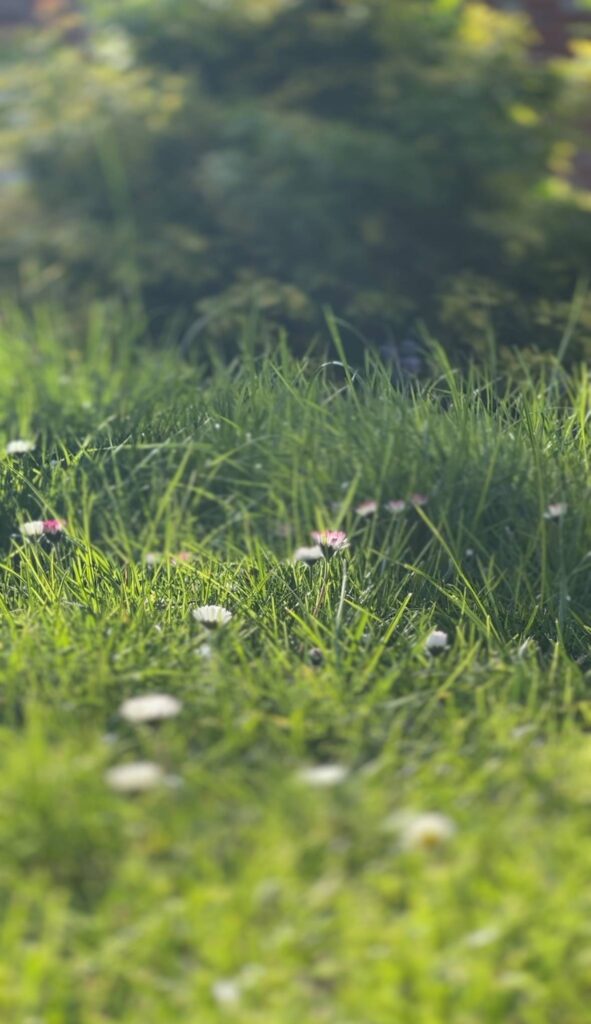
Green is the colour of what endures. In a world that moves fast and demands results, green reminds us that growth is still happening — even when we can’t see it.
Historically, green helped us survive. Our ancestors evolved to detect more shades of green than any other colour — a skill that allowed them to identify edible plants and avoid toxic ones. This deep connection is still hardwired into us. Research shows that spending time in green spaces lowers our heart rate and reduces stress.
Green has a more subtle meaning too. It’s the colour of the in-between — not the thrill of bloom or the starkness of decay, but the steady middle ground where life stretches out. Green doesn’t announce itself with a bang. It whispers. It settles in. It teaches us that just showing up can be as powerful as big change.
There’s something deeply comforting in that — in knowing that we don’t always have to push. That rest can be productive. That being alive, quietly and consistently is enough. Green invites us to trust time. To honour the slowness of our seasons. To believe that what is unfolding around us, however gradually, is still happening.
When I look at green now — in the garden, in the trees, in the small things growing unnoticed — I see more than colour. I see resilience and the echo of things that last.
Your garden is not separate from you
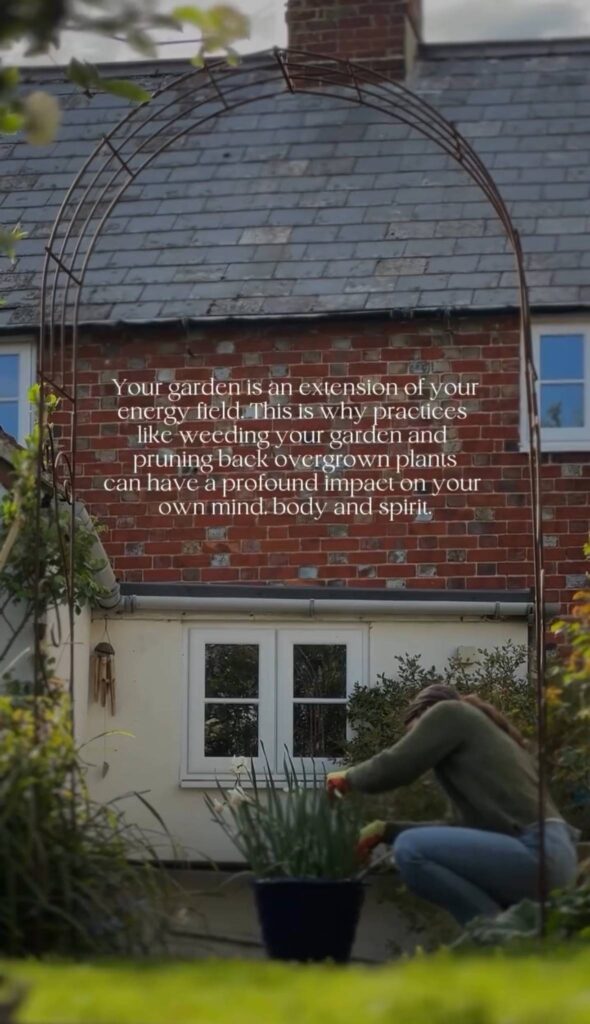
It reflects your energy — your pace and your presence. The state of your garden can mirror the state of your mind. When it’s overgrown, cluttered, or neglected, we can feel the same way internally. But when we clear space, tend to what matters, and let go of what’s no longer serving us, something inside us begins to shift too.
This isn’t just a metaphor. Weeding and pruning are small, physical rituals. They don’t require big gestures or perfect plans. Just attention. Slowly, with every small task, the space becomes more open, and so do we.
Reflections from your garden
Last week, Karanjit and I exchanged stories about our shared experience of leaving the corporate world. At the end, he said something that stayed with me:
“For many of us, our path in life is not straight — but we do eventually end up where we are meant to be.” – Karanjit Virik
Day to day, I’d be lying if I said this is how I feel about the future. It still feels just as uncertain as it always has.
But when I take a step back, it rings true. The path behind me wasn’t straight — but I don’t regret arriving in this moment.
His words remind me to trust my own lived experience a little more.
Thank you
If this weeks newsletter prompted any thoughts/ reflections for you – I’d love to hear them.
Have a lovely weekend 💚
-Hetty
Subscribe to Still Growing
Join 10,000+ amazing people